The Fed hawks must feel very awkward today. Before the July Fed meeting, Fed Governor Chris Waller said that if the July CPI report came in hot, a July rate hike would be on the table. Since that day, CPI inflation came in as a big miss, PPI inflation came in as a big miss, and today the jobs number whiffed with a negative report: 103,000 negative revisions and wage growth at cycle lows. Yes, very awkward indeed because we have many hawks who wanted a rate hike in the last meeting, and stressed we need to hike rates to fight inflation and that the labor market is strong.
So, is all this data enough to hold off a September rate hike with one more CPI report on the table? First let’s take a look at today’s job report because we do have some quirks here.
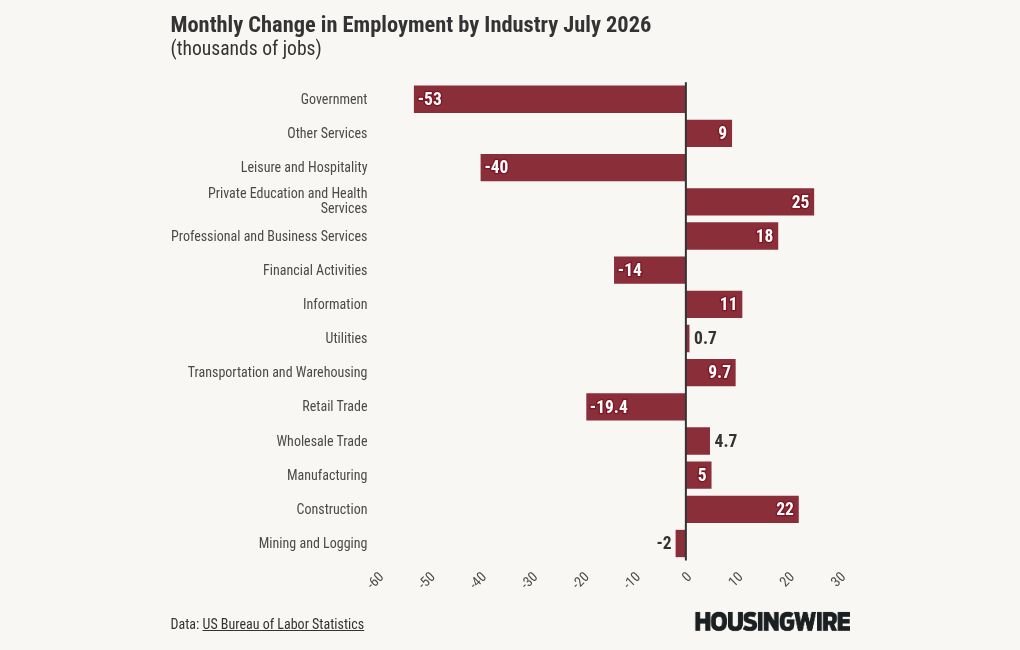
From BLS: Both nonfarm payroll employment (-23,000) and the unemployment rate (4.1 percent) changed little in July, the U.S. Bureau of Labor Statistics reported today. Employment declined in local government education and retail trade. Employment continued to trend up in health care.
Now, the government layoffs can be attributed to a school employment quirk, and I have joked about FHFA Director Bill Pulte’s major layoff binge when he was acting as the Director of National Intelligence, so that those layoffs won’t matter to the Fed. You can also make some case that the World Cup final layoffs came into this report, but that should be the last time we use that excuse. With the negative revisions, I am assuming the Fed might take back some of their position on the strength of a labor rebound. Below is the breakdown of the jobs created and lost.
A different take
I have had a very different take from others on last year’s labor weakness and this year’s early recovery. This is my second trade war and in the first year of a trade war, nothing works right, but the second year it does get better. My concern with the rebound of the labor market was that the Fed wasn’t going to read the labor data correctly, as it just assumes the labor recovery was a reacceleration of growth, and not just returning to a low-hire and low-fire trend.
Which then leads to the other point I have about this Fed: I believe their break-even with job growth is 33,000, meaning they just need to see 33,000 jobs created every month — with breadth — to feel that the economy is fine. I don’t agree with this take, but I’m not the Fed.
So, if we take the one-offs from this report, the Fed hawks still believe the labor market is fine. I know it sounds nuts, but this is where we are at. Over the last 18 months they have really emphasized that the growth of the labor force has been falling, and that growth fell again. So even with this negative jobs report, the unemployment report fell toward 4.1%.
Wage growth declines
Wage growth is down to a cycle low, at 3.2%, and the residential labor market looks weak. With the long end of the bond market rising and pushing mortgage rates higher, this number doesn’t look like it’s going to get better soon.
However, I also have had a different take on wage growth for some time now. I’ve talked about the Fed’s model — that to target 2% inflation they want wage growth to be 3% or lower as productivity really runs at 1%. In fact, in today’s episode of the HousingWire Daily podcast, which published before the jobs report, I discounted the number of jobs created or lost, but wanted everyone to focus just on the wage growth number.
The Fed might be encouraged that they’re gaining more traction toward their goal of wage suppression. However, they might need more confirmation that wage growth is really falling toward 3% or lower, and with this report being as awkward as it is, they might not put too much weight on the wage growth data.
Conclusion
All in all, this is a very confusing jobs report. The hawks can point toward a 4.1% unemployment rate and low jobless claims. The doves can point toward lower wage growth, negative revisions and say that the long end of the bond market has done a lot of lifting for the Fed, so why hike in September?
We do have one key CPI inflation report coming, and if that comes in tame, I would say the Fed probably can’t hike, but expect a lot of drama from now until the next Fed meeting.